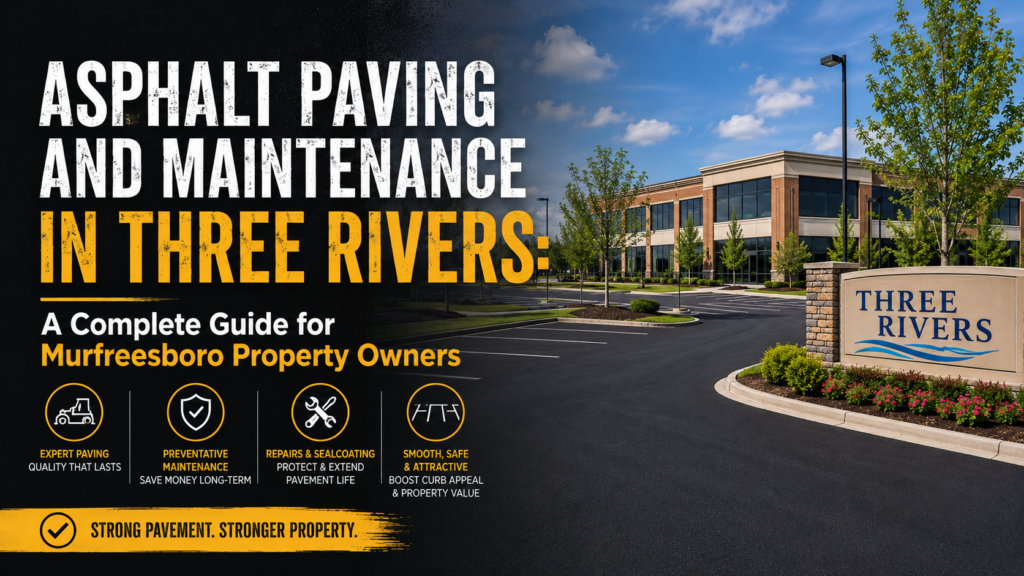
Three Rivers is a well-regarded residential neighborhood in Murfreesboro, Tennessee a community characterized by its tranquil environment, proximity to green spaces and water features, and the kind of quiet suburban setting that families seek when they want easy access to the city’s amenities without sacrificing a sense of calm. Like many of Murfreesboro’s established and growing neighborhoods, Three Rivers is home to a mix of well-maintained properties where homeowners take genuine pride in the condition of their homes and surroundings.
Pavement condition is an often-overlooked but highly visible aspect of residential property maintenance. Driveways, walkways, and the access roads that serve neighborhood homes are among the first things visitors and passersby notice. In a community like Three Rivers, where suburban appeal and property value are closely tied to presentation, understanding how Paving Contractor Three Rivers and maintenance works and what the best practices are for Middle Tennessee’s demanding climate is genuinely useful for any property owner.
The Foundation of a Good Asphalt Surface
The longevity and performance of any asphalt pavement begins not with the asphalt itself, but with what lies beneath it. A well-constructed asphalt surface is a layered system, and the quality of each layer determines the structural performance of the whole.
The subgrade the native soil at the base of the pavement system must be stable, well-drained, and compacted before any paving begins. Unstable subgrade conditions, such as poorly consolidated fill, high clay content soils, or areas with poor drainage, create conditions where pavement will settle unevenly and crack prematurely regardless of the quality of the asphalt placed on top.
Above the subgrade, a compacted aggregate base course is installed. This layer provides structural support, distributes load from vehicle traffic across a wider area of the subgrade, and facilitates drainage. The depth of the base varies with the expected load a residential driveway typically requires less base depth than a commercial parking lot or roadway.
The hot mix asphalt surface course is then placed atop the prepared base. It is spread to a consistent depth using a paving machine and compacted immediately using steel-drum rollers while the mix is still at the workable temperature. The density achieved during compaction is one of the most critical quality factors in a new asphalt installation inadequately compacted asphalt is permeable to water and deteriorates much faster than properly compacted pavement.
In Three Rivers, where residential driveways are the primary paving context, this full installation process is relevant for new driveways or complete replacements. For existing driveways receiving maintenance work, the focus shifts to the surface but the health of the base beneath remains a key consideration when professionals assess the appropriate maintenance approach.
Tennessee’s Seasonal Challenges for Asphalt Pavement
Murfreesboro’s climate is a significant factor in the maintenance requirements of asphalt surfaces in Three Rivers. The city sits in a climatic zone where all four seasons make themselves felt and each season brings different stressors to paved surfaces.
Spring typically brings the aftermath of winter’s freeze-thaw damage. The pavement that entered winter in good condition may emerge with new cracks, widened existing cracks, or newly formed potholes. Spring inspection and repair filling cracks before summer heat bakes them open further is the first maintenance priority of the year.
Summer in Murfreesboro brings sustained high temperatures and significant UV radiation. The asphalt surface absorbs heat readily, which contributes to the oxidation of binders over time. In areas with high sun exposure and limited shade common in neighborhoods with wide driveways and minimal tree cover summer UV exposure is the primary driver of the gradual fading and embrittlement that eventually leads to cracking.
Autumn is the optimal season for proactive paving maintenance. Temperatures are moderate, rainfall is typically reduced, and the ground has stabilized from summer’s heat. Crack sealing, sealcoating, and any pothole repair completed in fall prepare pavement to face winter in the best possible condition.
Winter brings the freeze-thaw cycle Murfreesboro’s most damaging seasonal force for pavement. Temperatures regularly oscillate around freezing, cycling multiple times in a single week. Each cycle forces water in pavement cracks to expand as it freezes, widening and deepening cracks progressively. Pavement that enters winter with unsealed cracks will reliably sustain greater damage with each passing cold spell.
Professional paving contractors familiar with Middle Tennessee’s seasonal patterns advise property owners to schedule maintenance in late summer or fall after summer’s heat has stabilized the pavement but before winter temperatures begin their damaging work.
Residential Driveway Paving in Three Rivers
For homeowners in Three Rivers, the driveway is both a functional necessity and a visible component of the home’s presentation. A well-maintained driveway enhances curb appeal, simplifies daily vehicle use, and contributes positively to the property’s value.
New driveway installation is the starting point for homes being built or for properties where the existing driveway has deteriorated beyond the point where maintenance is cost-effective. The installation process begins with proper site preparation ensuring adequate drainage, removing any existing pavement or organic material, and preparing and compacting the subgrade and base. Hot mix asphalt is then placed and compacted to the appropriate depth for residential use, typically a minimum of two to three inches of compacted asphalt over a well-prepared base.
Driveway resurfacing also called overlaying is an intermediate option for driveways whose surface has worn significantly but whose underlying base remains structurally sound. A new layer of asphalt is applied over the existing surface after appropriate preparation, effectively renewing the driveway’s driving surface at a fraction of the cost of full replacement. Resurfacing is appropriate when surface cracking, fading, and minor wear are present without the base failure indicators such as alligator cracking or significant depression.
The distinction between a driveway that is a candidate for resurfacing versus one that requires full replacement is an important one, and it requires professional assessment. Applying an overlay to a driveway with base failure issues will not solve the underlying problem the overlay will develop the same surface failures as the original pavement within a relatively short time.
For Three Rivers homeowners considering driveway work, the ideal outcome of any professional assessment is a clear understanding of the driveway’s current condition, the specific services appropriate for that condition, and the expected performance of those services over time.
The Role of Drainage in Pavement Longevity
Of all the factors that influence how long an asphalt driveway or parking surface lasts in Murfreesboro, drainage is among the most important and most frequently overlooked. Water is asphalt’s primary enemy not because asphalt is inherently vulnerable to moisture on the surface, but because water that infiltrates the pavement structure or accumulates beneath it can cause catastrophic base failure.
Proper drainage design begins with surface grading. Asphalt pavement should be installed with a minimum cross-slope to ensure water runs off the surface rather than pooling. A residential driveway typically requires a minimum one to two percent cross-slope enough to direct water to the sides without being perceptibly steep.
Beyond the pavement surface itself, the areas adjacent to the driveway must also drain effectively. Downspouts that discharge onto or near the driveway, low spots where water collects at the driveway’s edge, and grading that directs surface runoff toward rather than away from the pavement are all conditions that should be addressed as part of a comprehensive pavement maintenance approach.
In Three Rivers, where some properties back onto green spaces or water features and where the neighborhood’s natural setting may include varying topography, drainage awareness is particularly important. Property owners who notice standing water on or near their driveway after rainfall should address this condition proactively it is a warning signal that the pavement’s long-term durability may be at risk.
French drains, catch basins, and channel drains can all be incorporated into a pavement system to manage water that would otherwise threaten the pavement’s structural integrity. A paving contractor with experience in residential drainage solutions can assess the specific conditions at a Three Rivers property and recommend the most appropriate water management approach.
Sealcoating: Protecting the Investment
Sealcoating is the single most impactful maintenance service for extending the service life of an asphalt driveway in Three Rivers. When applied to a properly prepared surface at the right time and in the right conditions, sealcoat creates a protective barrier that shields the asphalt from the specific stressors that drive deterioration in Middle Tennessee.
The active ingredients in a quality asphalt emulsion sealcoat include refined coal tar or asphalt cement mixed with water, emulsifying agents, inert mineral fillers, and additives designed to enhance adhesion, flexibility, and durability. When applied to a clean, crack-free surface and allowed to cure fully, sealcoat bonds to the asphalt surface and provides a sacrificial protective layer that absorbs UV radiation, resists water infiltration, and creates a chemical barrier against vehicle fluid spills.
The preparation work that precedes sealcoating is as important as the sealcoat material itself. The surface must be thoroughly cleaned of dirt, organic matter, and oil stains any contamination remaining on the surface will prevent proper adhesion. Cracks must be filled before sealing. Existing oil stains should be treated with a primer to prevent them from bleeding through the sealcoat.
Application is typically performed by spray or squeegee in two coats, with the first coat allowed to dry before the second is applied. Traffic should be kept off the sealed surface for a minimum of 24 to 48 hours, and longer in cool or humid conditions that slow the curing process.
For new driveways in Three Rivers, the first sealcoat should be applied six to twelve months after installation. Subsequent applications every two to four years maintain the protective layer. Property owners who observe their driveway beginning to fade from black toward gray are seeing the first sign that the oxidation process is advancing and that sealcoating is due.
Crack Sealing Before Winter
Perhaps the single most time-sensitive paving maintenance action for Three Rivers homeowners is crack sealing before winter. The logic is straightforward: any crack that is open when temperatures begin to cycle around freezing will allow water infiltration, and that water will expand when it freezes, widening and deepening the crack with each successive freeze-thaw cycle.
A crack that is one-quarter inch wide in October may be half an inch wide in March and the base beneath it may have been weakened by months of freeze-thaw cycling. Sealing that crack in fall costs a fraction of what it will cost to repair the expanded damage in spring.
Hot-applied crack sealant a rubberized, flexible material that is melted and poured into cleaned cracks is the professional-grade approach to crack sealing. Unlike simple cold-pour fillers, hot-applied sealant bonds firmly to the crack edges, remains flexible through the thermal movement of the pavement, and provides a watertight seal that resists the pressures of freeze-thaw expansion.
The crack sealing process begins with routing using a specialized machine to create a uniform, clean reservoir in the crack that provides maximum surface area for sealant adhesion followed by blowing the crack clean with compressed air to remove all debris. The hot sealant is then applied to fill the routed channel, and sand or fine aggregate may be broadcast over the surface to prevent tracking before the sealant fully cures.
For Three Rivers property owners who complete their fall maintenance checklist crack filling, minor repairs, sealcoating if due before the first hard freeze of the season, the investment consistently pays back many times over in reduced spring repair requirements.
Signs That Your Three Rivers Driveway Needs Professional Attention
Understanding the visible indicators of pavement deterioration helps Three Rivers homeowners recognize when professional assessment or service is warranted. Most pavement defects, when caught early, are manageable with targeted maintenance. Left unaddressed, they progress toward conditions requiring much more extensive and expensive intervention.
Color Change: A driveway surface that has faded from black to gray is showing the visible result of UV oxidation. This is the earliest stage of surface deterioration and the ideal time for sealcoating the pavement is still structurally sound and a sealcoat application can significantly extend its remaining service life.
Surface Cracking: Fine hairline cracks at the surface, particularly those running along the length of the driveway or in transverse patterns, indicate the progression of oxidative brittleness. These cracks are excellent candidates for crack filling before water infiltration begins.
Edge Cracking: Cracking along the edges of a driveway, particularly where the asphalt meets the surrounding soil, may indicate inadequate base support at the edges or drainage issues. Edge cracking should be addressed promptly, as water entry at the edges can undermine the entire pavement structure.
Alligator Cracking: The interconnected network of surface cracks resembling reptile scales is a sign of base failure typically caused by water infiltration and the progressive weakening of the base material. This condition requires excavation and reconstruction, not surface maintenance.
Depressions and Ruts: Low spots where water pools or ruts from repetitive vehicle loading indicate base settlement or deformation. These conditions may worsen significantly over winter and should be investigated professionally.
Potholes: The endpoint of the deterioration process, potholes require immediate attention both for safety and to prevent the loss of additional pavement area as vehicles continue to stress the unsupported edges of the hole.
For Three Rivers homeowners who see any of these conditions developing, a consultation with a qualified paving contractor is the right next step. An experienced professional can distinguish between conditions that are appropriate for surface maintenance and those indicating more fundamental structural issues a distinction that determines the right scope and type of service.