Frozen Storage in Saudi Arabia: A 2026 Cost Guide
Frozen storage in Saudi Arabia is the invisible engine behind everything from your weekend grocery run to the seasonal collections hanging in Riyadh shopping malls. As imports rise and the Kingdom builds out its logistics ambitions under Vision 2030, businesses increasingly need deep-freeze space they can rely on year-round. This 2026 cost guide walks through how frozen storage works, what drives the price, and how to pick a partner that will not let your inventory down.
Get the decision right and you unlock bulk buying, longer shelf life, and smoother distribution. Get it wrong and a single equipment failure can wipe out an entire shipment. Here is what every Saudi operator should understand before signing a contract.
What Is Frozen Storage and Why Does It Matter?
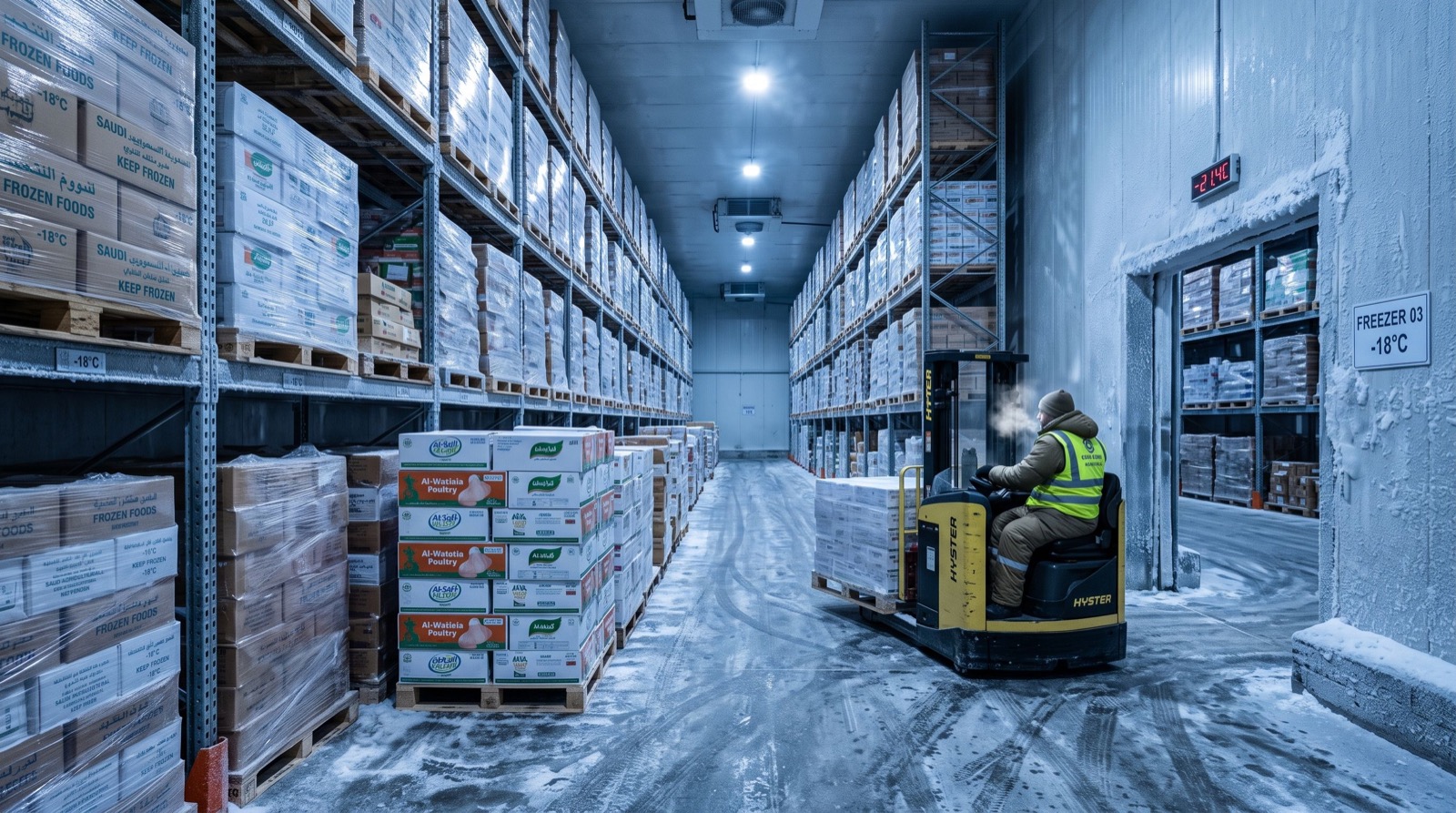
Frozen storage holds goods at temperatures well below zero, usually between -18°C and -25°C, to halt the biological activity that causes spoilage. Unlike chilled space, which merely slows decay, deep freezing effectively presses pause on a product’s clock. That makes it ideal for long-term holding of meat, seafood, ready meals, and even certain industrial and textile materials.
In a market where outdoor temperatures soar past 45°C, the margin for error is thin. A frozen warehouse that drifts even a few degrees can compromise food safety and trigger regulatory problems. That is why serious importers treat deep-freeze capacity as critical infrastructure rather than a convenience.
Which Industries Depend on Deep-Freeze Space?
Frozen storage serves a broader range of sectors than most people expect. The main users across the Kingdom include:
- Food importers handling meat, poultry, and seafood
- Quick-service restaurant chains managing central kitchens
- Ice cream and dessert manufacturers
- Pharmaceutical firms needing ultra-low temperatures for specific products
- Retailers consolidating stock before store delivery
Even the fashion sector touches cold logistics. Natural fibres, certain dyes, and protective packaging benefit from stable, low-humidity environments, which is why specialist Storage for the Fashion Industry often sits alongside temperature-controlled facilities in large multi-zone warehouses.
How Much Does Frozen Storage Cost in 2026?
Pricing reflects the higher energy load of deep freezing. Expect to pay more than you would for chilled or ambient space. The table below offers realistic 2026 planning figures for the Saudi market.
| Freeze Grade | Temperature Range | Typical Monthly Rate (SAR/m²) | Common Use |
|---|---|---|---|
| Standard frozen | -18°C to -22°C | 110 – 170 | Meat, seafood, ready meals |
| Deep frozen | -22°C to -25°C | 160 – 230 | Ice cream, long-term stock |
| Blast freezing | -30°C and below | On request | Rapid freezing of fresh catch |
Blast freezing, which rapidly locks in freshness, is usually charged per batch rather than per square metre. Annual contracts lower unit costs, and bundling handling and transport can reduce your total spend compared with piecing services together separately.
Frozen Versus Chilled: How Do You Choose?
The decision hinges on the product and the holding period. Chilled storage suits items that must stay fresh for days or weeks without changing texture, such as dairy and produce. Frozen storage suits goods you need to hold for months, or products that are sold frozen to the end customer.
Many businesses need both. A provider offering flexible Frozen Storage plus adjoining chilled zones lets you keep everything in one place and shift the mix as demand changes through the year, which is especially useful during Ramadan and peak retail seasons.
What Should You Look For in a Provider?
From working alongside Saudi importers, a few factors consistently separate dependable operators from risky ones. Use this checklist before you commit:
- Redundant refrigeration: Dual compressors prevent a single failure from thawing your stock.
- Backup generators: Non-negotiable given regional load peaks in summer.
- Real-time alerts: Automatic notifications when temperatures drift out of range.
- Certification: HACCP and SFDA compliance for any food-grade facility.
- Strategic location: Near ports and highways to reduce thaw risk in transit.
Choosing trusted professionals with a documented track record is the single best way to avoid costly surprises. A lowball quote means little if the facility cannot hold temperature during a July outage.
Practical Tips to Protect Frozen Inventory
Your own practices matter as much as the warehouse itself. Keep the cold chain unbroken from supplier to shelf, because every thaw-refreeze cycle degrades quality. Label pallets clearly with product type, freeze date, and target temperature. Rotate stock on a first-in, first-out basis so older inventory moves first.
Review temperature logs regularly. Reputable facilities provide dashboards that reveal trends, and catching a recurring warm spot early can save an entire season’s stock. Train your team to minimise door openings, which cause the single biggest avoidable temperature spike.
How Does Frozen Storage Fit Saudi Arabia’s Logistics Push?
Saudi Arabia is investing heavily in becoming a regional logistics hub, and cold chain is a central pillar of that ambition. New industrial zones, expanded ports, and improved road links all make it easier to move frozen goods quickly between cities, which in turn supports larger import volumes and steadier retail supply.
For businesses, this means frozen capacity is no longer concentrated in a single location. Distributed deep-freeze facilities near major demand centres such as Riyadh, Jeddah, and Dammam reduce transit time and the risk of thawing. Shorter journeys protect quality and lower the energy wasted on reheating cold loads.
Energy efficiency is also moving up the agenda. Operators are adopting better insulation, variable-speed compressors, and smarter monitoring to cut consumption. When comparing providers, ask about their energy practices, because efficient facilities tend to pass savings on and are less likely to cut corners during peak summer demand.
Seasonality matters too. Demand spikes around Ramadan, Eid, and the cooler winter retail season, so a provider who can flex capacity up and down without penalty is worth more than one offering only rigid annual blocks. Flexibility protects you from paying for empty space in quiet months.
Frequently Asked Questions
What temperature is frozen storage kept at in Saudi Arabia?
Standard frozen storage in Saudi Arabia runs from -18°C to -22°C, while deep-freeze facilities reach -25°C. Blast freezing drops to -30°C or lower for rapid freezing of fresh produce and seafood.
Is frozen storage more expensive than chilled?
Yes. Deep freezing uses more energy, so expect roughly 30 to 50 percent higher rates than comparable chilled space. Annual contracts and bundled logistics help offset the difference.
Do I need regulatory approval to store frozen food?
Food-grade facilities must meet Saudi Food and Drug Authority standards, including documented temperature control and traceability. Always confirm your provider holds valid certification.
Can a single warehouse handle frozen, chilled, and ambient goods?
Many modern Saudi facilities are multi-zone, letting you store frozen, chilled, and dry goods together while paying only for the capacity each category requires.
Final Thoughts
Frozen storage in Saudi Arabia is a strategic asset, not just a line item. By understanding the real 2026 costs, matching each product to the correct freeze grade, and partnering with a certified, well-equipped operator, you safeguard your inventory against the Kingdom’s punishing heat. Audit your current cold-chain setup now, and make sure it can survive the next power outage rather than discovering its limits the hard way.