Queue Management System in Saudi Arabia: 7 Ways It Boosts Revenue
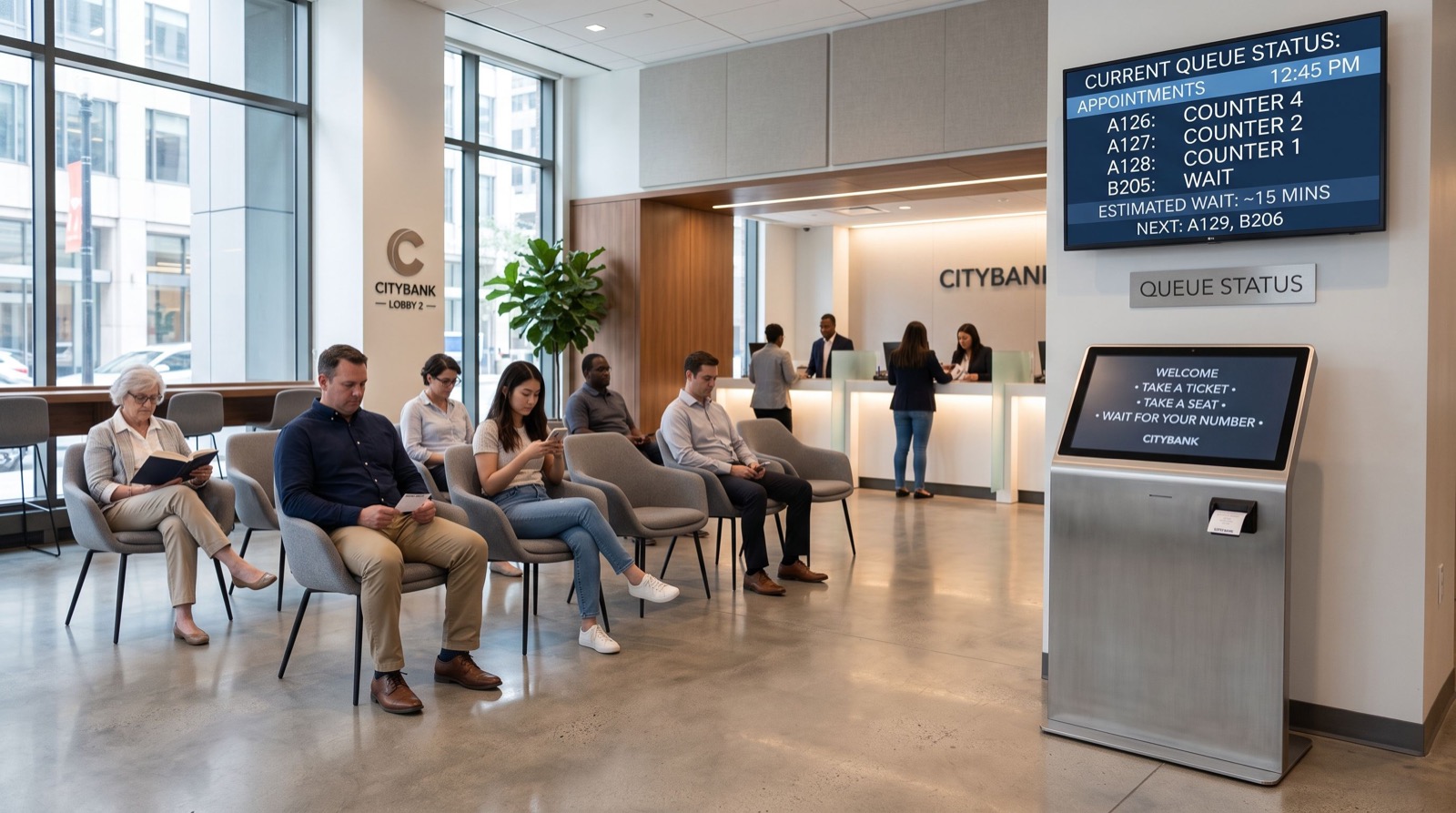
A queue management system in Saudi Arabia is no longer just a tool for tidier lines — in 2026 it is a genuine revenue engine. Retailers, telecom operators and healthcare providers across the Kingdom are discovering that how you manage waiting directly shapes how much customers spend, how often they return, and how efficiently staff perform. This article focuses on the commercial upside: seven concrete ways a smart queuing platform grows the bottom line.
If you have ever watched customers abandon a crowded counter, you already understand the problem intuitively. The good news is that the fix is measurable, affordable and fast to deploy. Let’s look at where the money actually comes from.
1. Fewer Walkouts, More Completed Sales
The most immediate win is retention at the point of service. When customers see an organised system with a clear wait estimate, they stay. Research summarised by Harvard Business Review shows that perceived waiting — not just actual waiting — drives abandonment. A queue platform tackles both by shortening real waits and making the remaining time feel managed and fair.
Every customer who stays instead of leaving is a sale you would otherwise have lost. Across a busy telecom store, recovering even a handful of walkouts per day compounds into serious monthly revenue. This is exactly why a queue management system in saudi arabia is now viewed as a revenue tool first and an operations tool second.
2. Smarter Staffing Around Real Peaks
A queue management system in Saudi Arabia captures live footfall data, revealing exactly when your rushes happen. Instead of guessing, you roster staff to match demand — more agents at the Thursday evening peak, fewer during the quiet mid-morning lull.
- Cut idle payroll during slow periods.
- Add capacity precisely when queues build.
- Balance workloads fairly across the team.
Right-sized staffing protects both service quality and your wage bill simultaneously.
3. Upsell Opportunities in the Waiting Window
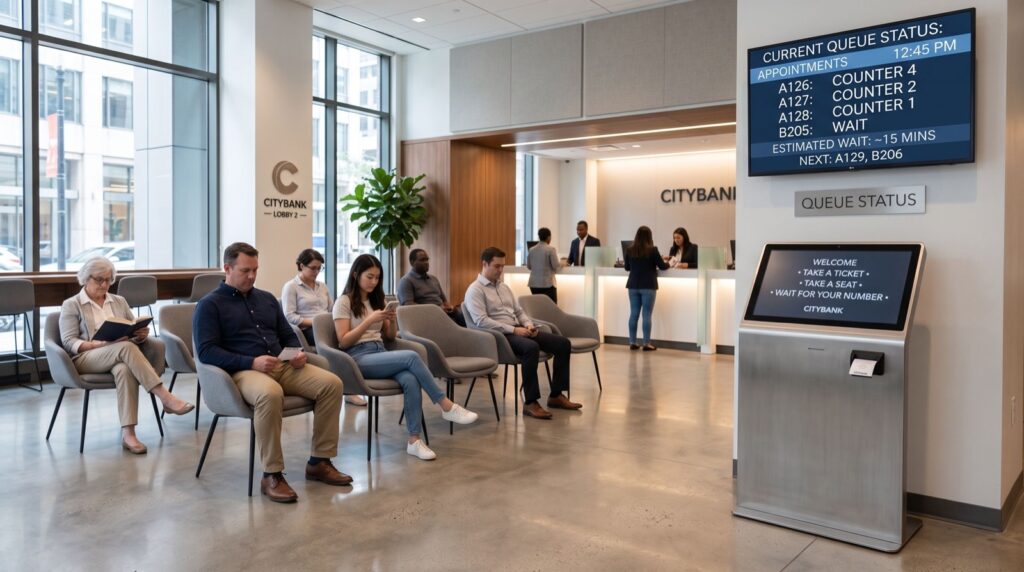
Digital signage tied to the queue turns dead waiting time into a marketing channel. While customers watch their position advance, screens can promote bundles, accessories or seasonal offers. For telecom retailers, that means surfacing device deals and add-ons exactly when attention is highest.
Pairing communication tools with the counter
Front-desk agents who juggle in-person service and phone enquiries need reliable audio. A dependable queue management system combined with quality headsets keeps every conversation clear, so upsell scripts land without repetition or noise interference.
4. Data That Sharpens Every Decision
The analytics dashboard is where a queuing platform earns its keep long-term. Managers gain a live view of service times, no-show rates and agent performance. The table below shows how those metrics translate into commercial action.
| Metric Tracked | What It Reveals | Revenue Action |
|---|---|---|
| Average wait time | Bottleneck severity | Add capacity at peaks |
| Service time per agent | Training gaps | Coach slower staff |
| No-show rate | Booking friction | Send SMS reminders |
| Peak-hour footfall | Demand pattern | Schedule promotions |
The real power of this data is that it converts gut feelings into decisions you can defend. Instead of arguing about whether a branch is understaffed, you point to the numbers. Instead of guessing which promotion to run, you schedule it against your proven peak footfall window. Over a quarter, that discipline reshapes the entire economics of a branch.
5. A Premium Brand Experience
Perception matters. A calm, well-signposted service floor signals professionalism and builds trust. For a queue management system in Saudi Arabia serving demanding urban customers, that polish justifies premium positioning and supports higher-value transactions.
Think about the last time you entered a well-run bank versus a chaotic one. The organised environment felt more trustworthy before a single word was spoken. That first impression carries into every transaction, making customers more comfortable with upgrades, longer contracts and premium products. In 2026, experience is the product — and the queue is the first chapter of that story.
Consider partnering with reliable local experts who can align your queuing rollout with your wider brand and marketing strategy, so the in-branch experience matches your promotional messaging.
6. Reduced Staff Turnover
Chaotic queues burn out frontline teams. When the system absorbs the stress of managing lines, agents focus on service quality instead of crowd control. Lower stress means lower turnover — and every retained employee saves recruitment and training costs.
The overlooked ROI of calmer staff
Here is an original insight: the productivity gain from happier staff often exceeds the direct wait-time savings. A team that isn’t firefighting sells more, makes fewer errors and delivers warmer service. Factor that into your ROI model.
7. Scalable Growth Across Branches
Once one location proves the numbers, cloud-based platforms let you replicate the setup across your network with consistent standards. Follow this rollout sequence:
- Prove ROI at a flagship branch.
- Standardise service categories and routing rules.
- Deploy to high-traffic locations next.
- Centralise analytics for network-wide visibility.
- Refine continuously using pooled data.
Centralised data turns a collection of branches into a coordinated, benchmarked operation. You can rank locations by wait time, spot which managers run the tightest floors, and share those best practices across the network. What starts as a queue tool quietly becomes a performance-management framework for your entire retail estate.
Putting It All Together
The seven benefits above are not isolated wins — they reinforce each other. Fewer walkouts feed better data. Better data sharpens staffing. Smarter staffing frees agents to upsell. Upsells fund expansion. This virtuous cycle is why forward-looking Saudi businesses treat a queue management system in Saudi Arabia as core infrastructure rather than a nice-to-have gadget.
The barrier to entry has never been lower. Cloud platforms mean no heavy servers, subscription pricing spreads the cost, and deployment on a single branch takes days, not months. There is little reason to keep losing revenue to disorganised lines when the fix is this accessible.
Frequently Asked Questions
How quickly does a queue management system pay for itself?
Many Saudi businesses recover their investment within three to six months through reduced walkouts, better staffing efficiency and increased upsell revenue captured during the waiting window.
Can a queue management system in Saudi Arabia integrate with my CRM?
Enterprise platforms offer APIs that connect with CRM, appointment and POS systems, so customer data and service history flow together for a unified experience.
Does it work for small businesses too?
Absolutely. Entry-level ticketing systems are affordable and quick to install, giving even single-branch clinics and shops the same organised, data-driven advantage.
What ROI metrics should I track first?
Start with walkout rate, average wait time, upsell conversion during waits, and staff utilisation. These four numbers give the clearest early picture of commercial impact.
Conclusion
A queue management system in Saudi Arabia delivers far more than shorter lines — it protects sales, sharpens staffing, unlocks upsells and builds a premium brand experience that keeps customers coming back in 2026. The technology is proven and the payback period is short, making it one of the highest-return operational upgrades available today.
Want to turn waiting time into revenue? Map your current footfall, pick a platform that fits your growth plans, and start capturing the sales your queues are quietly costing you.